
Property advice · · 3 min read
Reading a property differently with artificial intelligence
Reading a property differently with artificial intelligence: volumes, light and real potential, beyond appearances.
By Compagnie Foncière du Mont-Blanc

A viewing often starts the same way. The door opens, your eye sweeps the rooms, stops on one detail, then another. A layout surprises you, a piece of furniture catches your attention, an atmosphere takes over. In a few moments, an impression forms, sometimes without your knowing exactly why.
An interior marked by another era, a layout designed for a past use or very assertive decoration shape how you see the place. The eye lingers on what is immediately visible. Volumes, light and the logic of the spaces take second place, even though they make up the structure of the property.
So there is a gap between what strikes the eye and what gives a place its value. It is rarely put into words, but it weighs on the decision to buy. This is where artificial intelligence can come in.
What artificial intelligence changes in how a property is read
Applied to property, artificial intelligence does not touch the fabric of the building. It changes the way a property is read. The house stays the same, with the same walls and the same light.
What changes is the order in which the space reveals itself. AI-assisted projection tones down the passing elements (furniture, colours, inherited uses) to bring out what structures the place: proportions, circulation, the flow between spaces.
This reading refocuses attention on the architecture. It separates what belongs to the fitting-out from what makes up the nature of the property. Zillow sees this distinction as decisive in understanding the real potential of a home from the very first images a buyer sees (Zillow, 2025).
When projection becomes a tool for understanding
When a buyer hesitates, the reason does not always lie in the property. It often lies in the lack of a clear spatial story: the space exists, but nobody has told its story yet.
AI-assisted projection then offers a readable hypothesis. It suggests a possible layout, smoother circulation, an atmosphere consistent with the existing volumes. It does this without promising anything the property does not already offer and without misleading staging.
Attention then moves away from immediate appearance towards use, the coherence of the place and the way of life it allows. The National Association of Realtors observes that these visualisation tools reduce the uncertainty buyers feel in the early stages of a property project, because they make future scenarios more concrete (Davari, 2024).
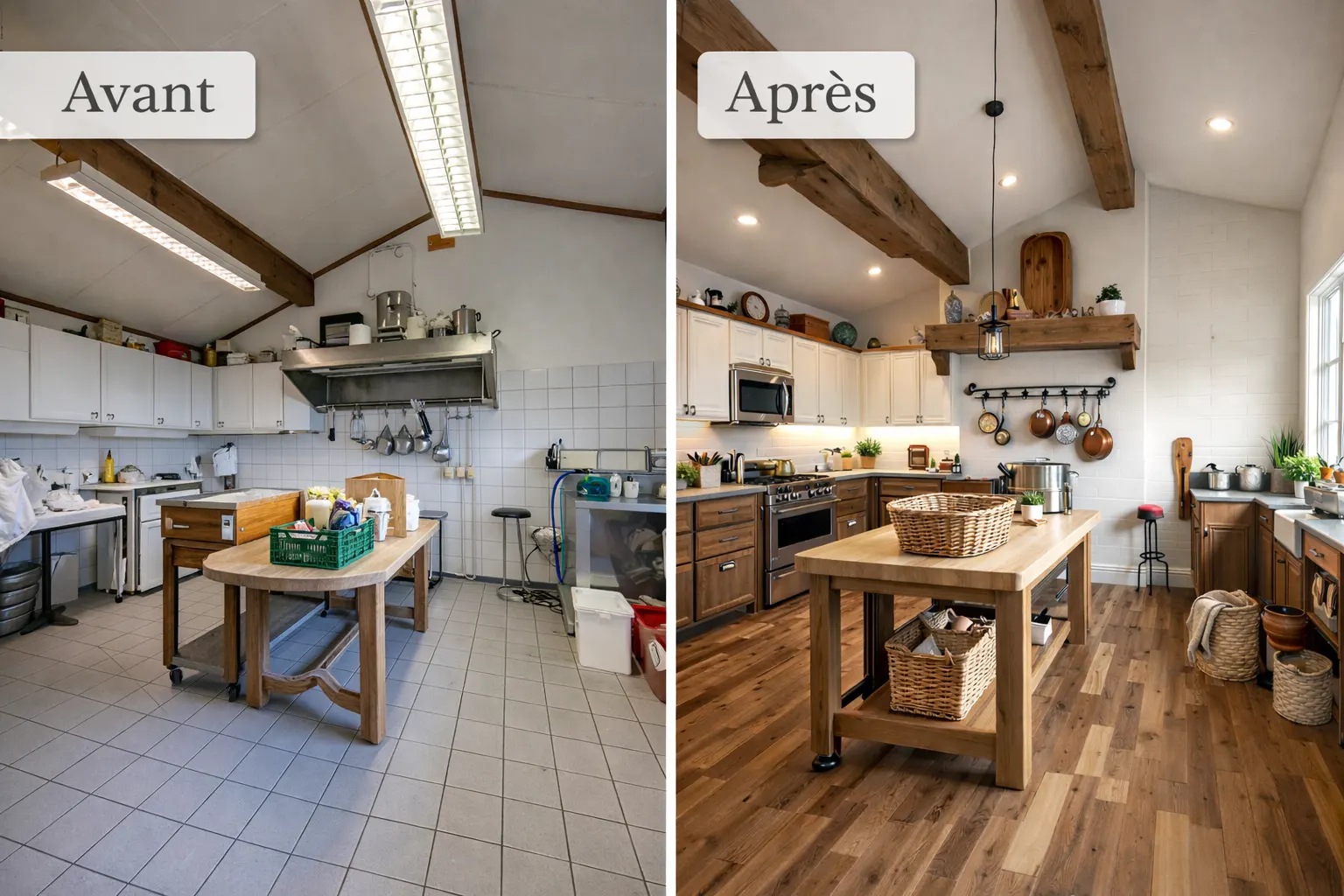
A method grounded in faithfulness to reality
A projection only has value if it respects reality: volumes unchanged, openings kept, constraints acknowledged. It sheds light on the property without transforming it.
Professional bodies insist on this transparency. Florida Realtors stresses the importance of clearly distinguishing real images from edited ones, so that property marketing stays clear and honest (Florida Realtors, 2024).
Used rigorously, AI becomes an aid to reading, just like a floor plan or an architectural section. It is an analytical tool, used to understand the property.
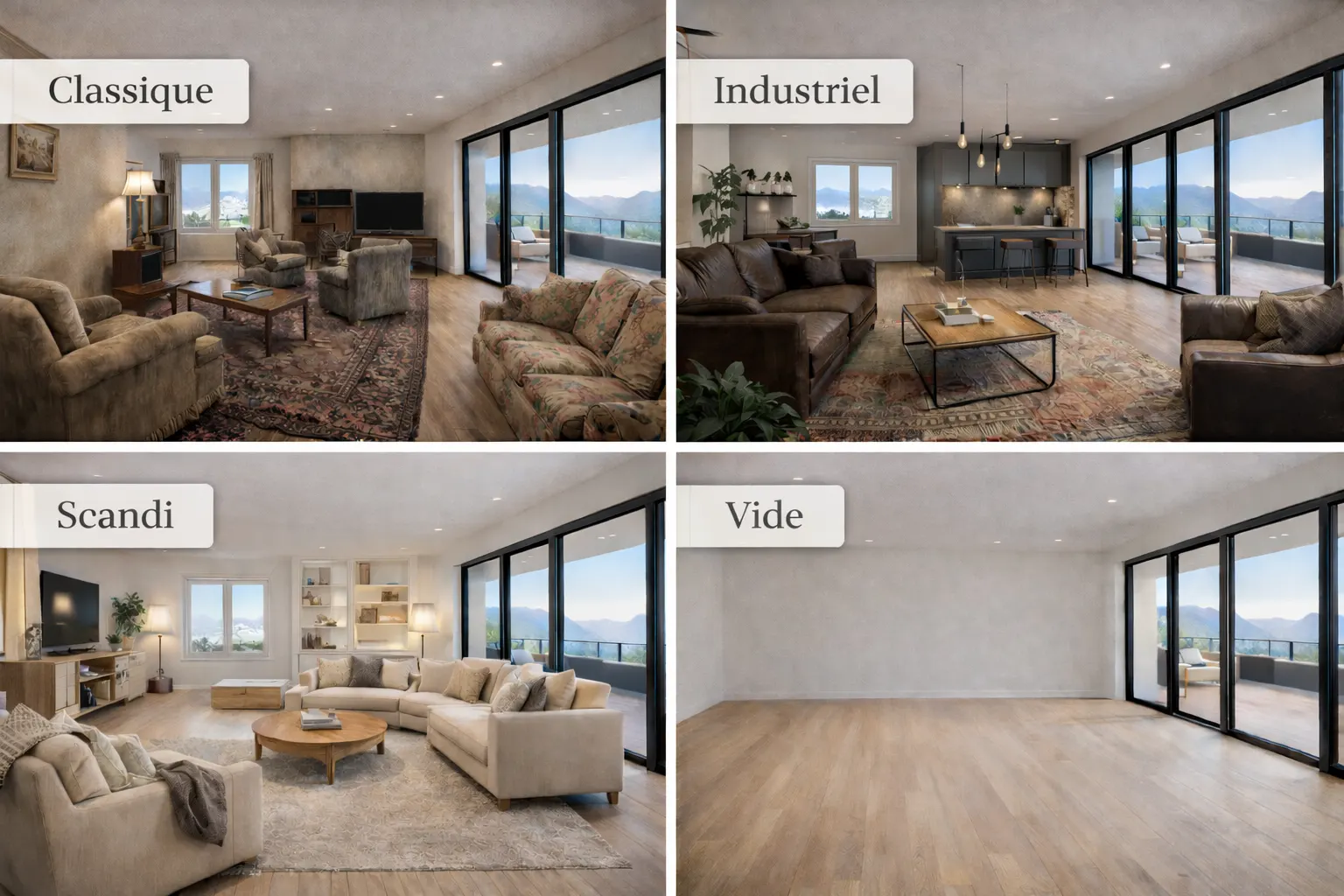
The essential question
In the end, the question is not about how a property looks on the day of the viewing. What counts is being able to grasp its structure, its logic and its potential.
Do we look at a place for what it shows today, or for what it could become tomorrow?
In property, value does not lie only in what can be seen. It emerges from what you manage to understand about the place.