
Lifestyle · · 4 min read
How history shapes the rarity of an exceptional chalet
Craftsmanship, period charm and a documented history: what makes an exceptional chalet rare, and what sets its price.
By Compagnie Foncière du Mont-Blanc, updated

When timber tells a century of mountain life
Round a bend on a forest track, in Verbier or Megève, a hundred-year-old chalet comes into view: dark-grained beams, hand-carved corbelling, a base of rough stone. Step through the door and you enter another era, when snow was packed down with a wooden shovel and a stove burning Scots pine kept winter evenings going. These chalets, now exceptional properties, hold the memory of a valley in their timbers, along with the mark of a craft tradition. New construction struggles to imitate that rarity.
This extra soul comes at a price. At the top of the market, an authentic chalet with its original façade restored, dated lintels or a pastoral fresco on the gable can be worth 15 to 30% more than a contemporary building of the same size. Buyers, often international, want more than a mountain retreat: they are buying a story that will stay with them, and that they will pass on over several generations.
Savoyard roots, Bernese influence: the origins of the art chalet
The word chalet comes from the Latin cala, a hut. The chalet began as a farm building: it housed the cheesemaker, the cattle and the hay during the summer months. At the turn of the 19th century, road menders saw the first holidaymakers arrive from Geneva and Paris. Mountain farms became summer houses, then winter homes as skiing took off. Local carpenters reinvented the timber frame with the “dovetail” joint, a sturdy assembly without nails that can still be seen on historic chalets.
In the mid-19th century, the Romantic movement spread a taste for the picturesque Swiss chalet across the whole Alpine arc. Balconies were covered in floral friezes, gables were given carved fascia boards, and here and there a heart or an edelweiss was painted on as a signature. Later, Le Corbusier and Charlotte Perriand, drawn to the practicality of mountain dwellings, took inspiration from them for their modernist work: long horizontal lines, deep overhanging roofs, close integration with the landscape. This is how the “art chalet” was born, combining rustic simplicity with formal design, and in which every beam is part of the heritage.
What sets an exceptional chalet apart from a luxury chalet
A new chalet, even one designed by a well-known architect and fitted with discreet technology, can reach very high prices. Yet it will only be rare if it offers something that cannot be reproduced: a history.
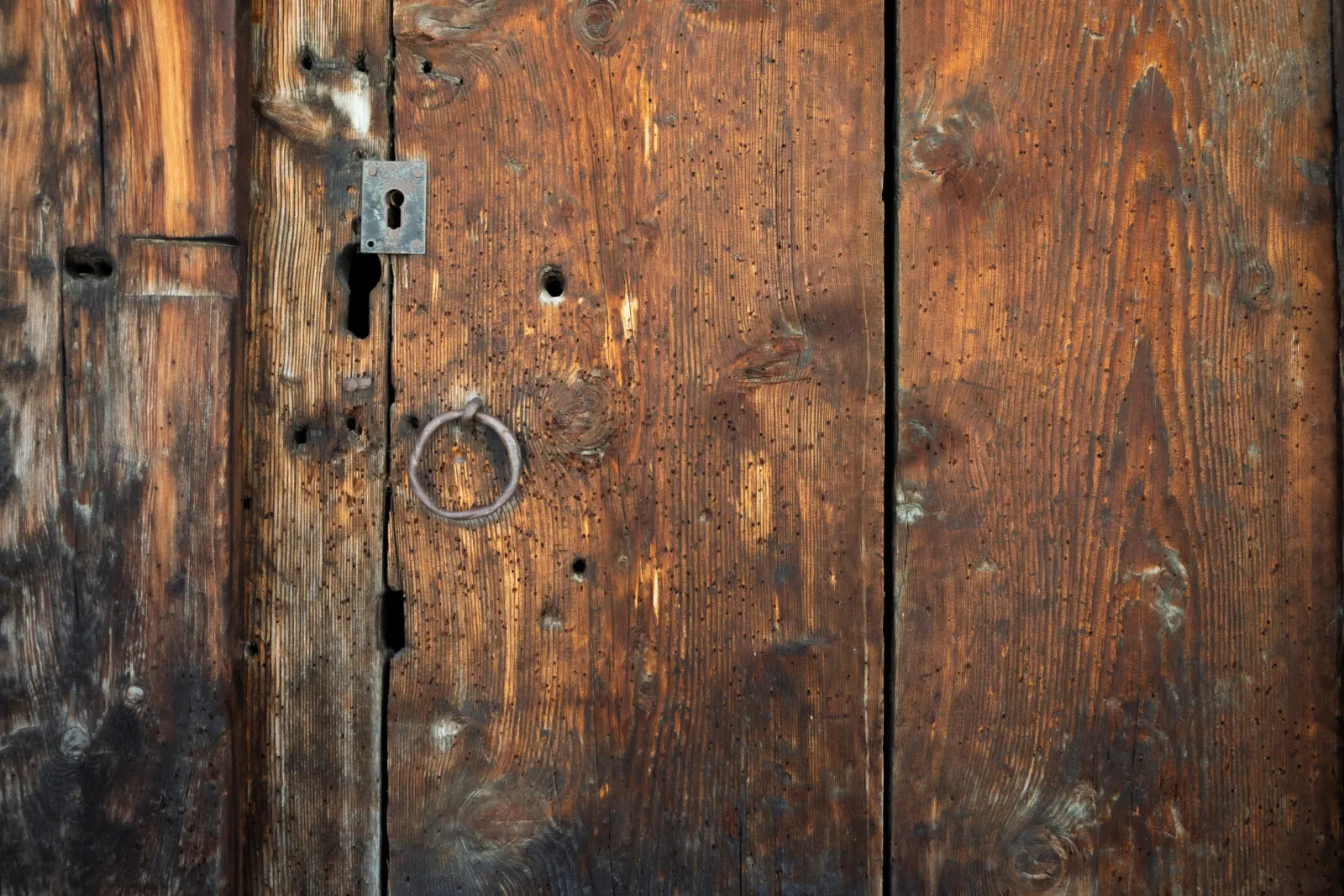
Material authenticity first
Nothing replaces a three-hundred-year-old beam, bored by woodworm and darkened by time, but still sound. Larch frames have a visual warmth that no artificially aged new timber truly matches.
Then the paper trail
A notarial deed stating the year of construction, a craftsman's stamp on a lintel, a photograph of the chalet dating from Henri Duhamel's first ascent: each of these proves the continuity of the place. Buyers of exceptional properties want to be able to tell the building's story over dinner.
Finally, the architectural signature
Some chalets bear the mark of a local master carpenter, a Savoyard decorator or an architect of Alpine modernism. When the specialist press can put a name to it, the value rises as a matter of course.
When renovation respects the heritage
An old chalet is not condemned to discomfort. Its rarity is matched by real practical value if the restoration respects the original spirit while bringing today's comfort. One example: replacing the original windows with extra-clear triple glazing clearly improves energy performance without taking away the character of the place. Heating goes under the boards of the old floor, where a low-temperature loop spreads a silent warmth, and the old soapstone stove becomes a decorative feature.
The golden rule is reversibility: any modern work must be removable without damaging the structure. Specialist architects choose timber-framed insulating linings, fitted at the finishing stage, or run services through the skirting boards so as not to cut into the century-old beam. This care costs more, about 15 to 20% more than a standard project, but the heritage value holds, and may even rise.
Views, altitude, ski access: what drives demand
An authentic chalet will always interest a circle of enthusiasts. If it also has an open view of Mont-Blanc, it moves into another category: it attracts the international investor looking for a prominent address and, often, a safe-haven asset. Direct access to the slopes (ski-in ski-out) adds further to its appeal. Rarity increases, because the slopes do not move and land registry rules often prevent any new building right beside them.
So there is a hierarchy of demand. At the top is the historic chalet with an open view, direct access to the slopes and a commune with moderate taxation. This combination can bring the price per square metre up to that of a penthouse on the right bank in Geneva. For a collector, the chalet is no longer just a second home: it is an asset, which can be sold at a large gain or handed down like a work of art.
Buying poetry or investing? What if they were the same thing?
An exceptional chalet brings together a rational investment and a purchase of the heart. Staying true to its history does not rule out modern living, and aiming for a return does not mean sacrificing the character of the place. A three-century-old timber, a signed fresco or a scalloped gable turn the house into a story that can be passed on, lent, let or sold. As luxury becomes more and more standardised, owning a unique piece, old and adapted to life today, remains a rare privilege.
Do you think you own one of these chalets? Talk to CFMB: we will tell you what it is worth, we will tell its story and we will find the person who will carry it on.