
Property advice · · 3 min read
Not being in a hurry to sell: rarely a real strategy
Not being in a hurry to sell feels reassuring, but the market moves and attachment to a home can cloud the decision.
By Compagnie Foncière du Mont-Blanc, updated

When we talk with owners about a property project, one sentence comes up again and again: “I'm in no hurry to sell. Maybe in a few years.”
Put like that, it sounds careful and measured, almost reassuring. It suggests the owner sets the pace and keeps their options open. Yet behind this restraint there is rarely a structured approach. More often than not, it reveals a decision left on hold for lack of a clear framework.
What this sentence really means
In most cases, saying you are in no hurry to sell does not mean giving up on selling. The stance usually covers several intentions:
- waiting for conditions that seem more favourable
- letting a decision that is still uncertain mature
- watching how the market develops
- keeping a certain freedom or comfort
These reasons are legitimate. The problem arises when time takes over and decides for the owner, with no planning and no real thought.
The market does not wait until you are ready
Many people link the right moment to the date the property goes on the market. In reality, the question of timing comes up much earlier. The market never stands still: rates move, demand shifts, buyer profiles change and the appeal of each region is redrawn.
In Switzerland, RealAdvisor points out that selling a property generally takes several months, not counting the earlier thinking phase, which is often underestimated (Chiouar, 2025).
In France, SeLoger reported in early 2025 that the average time to sell had reached 83 days, in a market that had become more wait-and-see (Cuzon, 2025).
These figures do not point to any ideal moment. They are a reminder that the context changes constantly, whether the seller is ready or not.
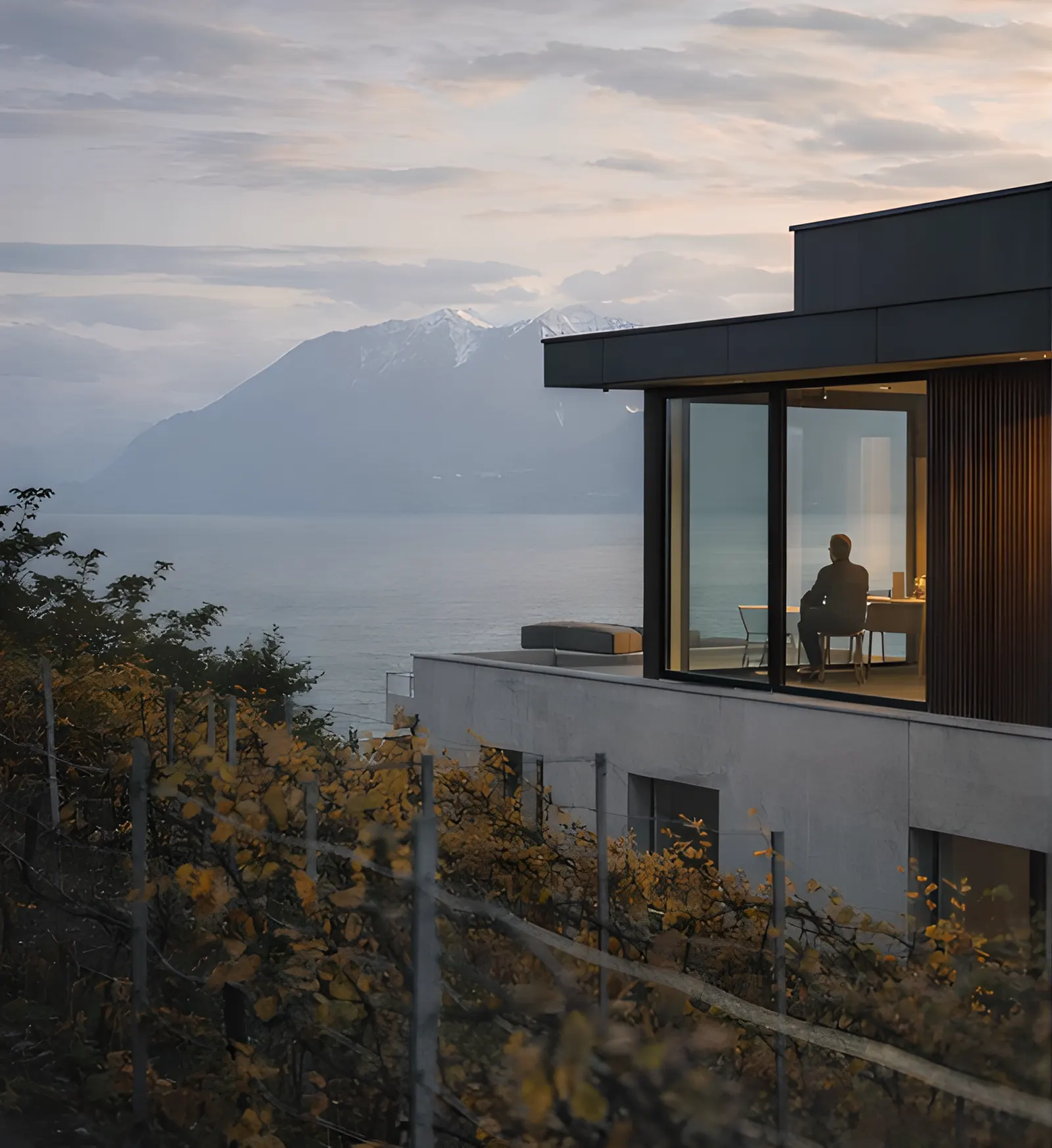
Waiting five years… but waiting for what exactly?
Talking about a sale in five years raises a question that is rarely asked: for what precise purpose?
Is it to wait for the value to rise, for a change in personal circumstances or for the market to improve? In practice, many owners realise afterwards that what mattered most was planning earlier: knowing the real value of the property, its positioning, its rarity and the possible scenarios, without committing straight away.
A more personal factor often comes into play too: emotional attachment to the property. Over the years, a home fills with landmarks and memories, which makes the decision harder and sometimes leads owners to put the sale off. With age, that delay can become a constraint. The sale is then no longer a choice you control; it is forced on you because your personal situation has changed.
Not being in a hurry is not a problem. Not deciding can be.
The calmest sales, especially for high-quality property, are rarely improvised. They come out of long-term thinking, sometimes several years before the property goes on the market.
Planning ahead does not mean rushing. Above all, it lets you make choices with good judgement, instead of having to put up with a market that has turned less favourable.

The key question
In the end, the question is not: “Am I in a hurry to sell?”
It is rather: “If I choose to wait today, is that a considered decision, or a delay with no real strategy?”
In property, time can work in your favour, provided you know exactly what you expect from it.
Going further
Planning a sale does not mean acting right away. The thinking often starts with a clear, realistic idea of what your property is worth on today's market.
A valuation tool gives you a first benchmark, with no commitment, before you think things through in more depth.