
Property advice · · 8 min read
Renovating before selling: good idea or false step?
Renovating before selling does not always add value to a property in western Switzerland. Here is how to present it.
By Compagnie Foncière du Mont-Blanc, updated

Should you renovate before selling?
Every time an owner thinks about putting their house or apartment on the market, the same question comes back: “Should I renovate before selling?” The idea seems logical. A contemporary kitchen, a refitted bathroom or solid oak parquet ought to raise the property's value and attract more buyers.
In the high-end segment of the property market in French-speaking Switzerland (Suisse romande), things work differently. Wealthy buyers are not looking for a property already transformed to the seller's taste. They want a rare setting, a fine view and a property they can make their own. Where the general public likes a home that is ready to move into, these buyers prefer to start from a neutral base and adapt it themselves.
That is why renovating before selling can turn out to be a false good idea. Some works, instead of increasing the value, reduce the property's appeal, complicate the negotiation and lengthen the time to sell. So when should you renovate, and when is it better to focus on presentation?
Common beliefs about renovating before selling
Three beliefs lead sellers to put large sums into works that do not deliver the expected result.
“A new kitchen always adds value”
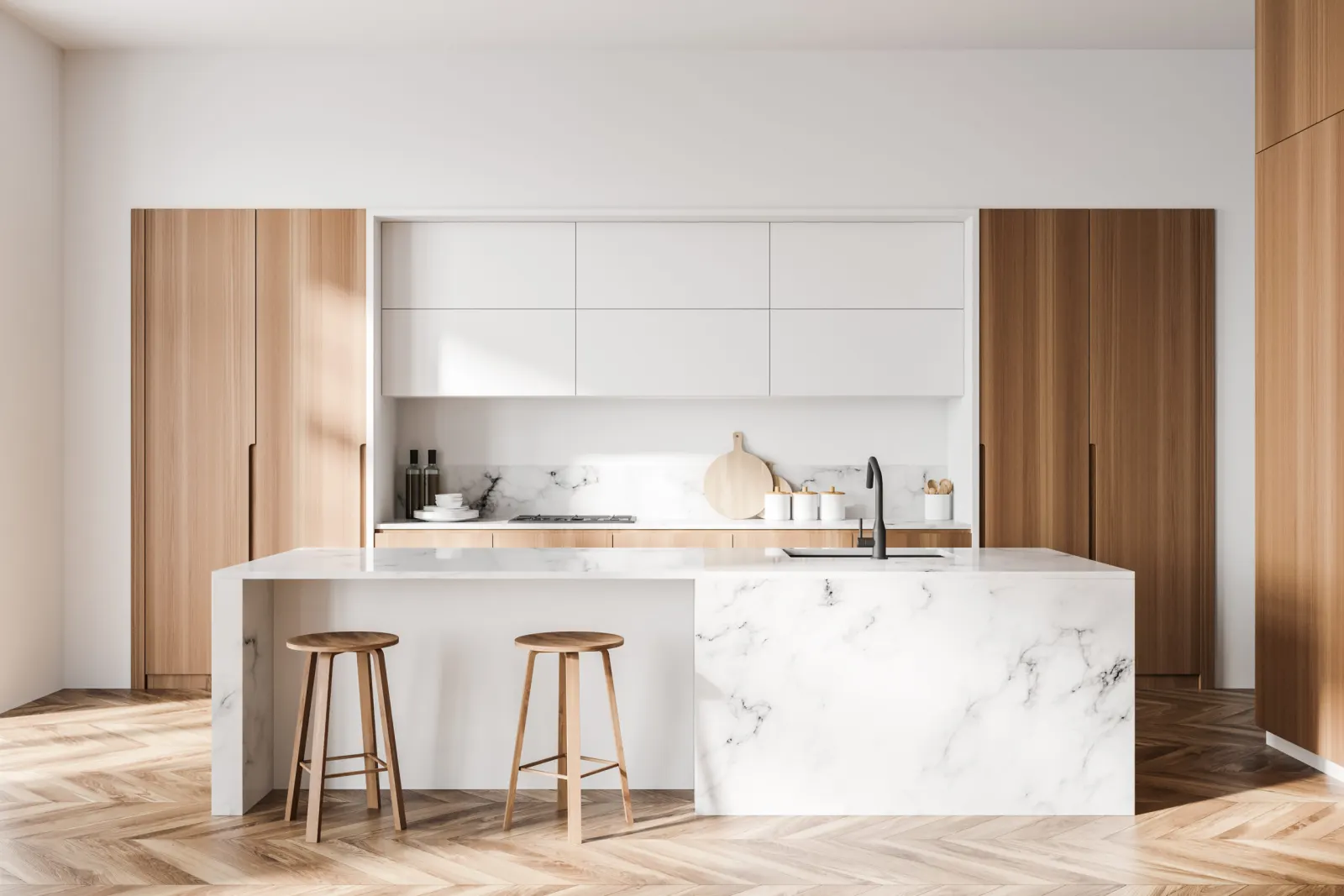
Many owners spend 80 000 to 120 000 CHF on a designer kitchen, convinced they will get their whole outlay back on the sale. In practice, the high-end buyer gives this spending little weight. They know they will probably replace the kitchen with another one suited to their style and habits. A lover of Japanese cooking will not want the same layout as a devotee of Italian food. In the end, the real gain in value rarely exceeds 30 to 40% of the initial investment.
“A renovated property sells faster”
How fast a property sells depends on structural factors: the location, the rarity of the property and the accuracy of the price. In Geneva, a villa in Cologny with a view of Lake Geneva will go quickly, even if it is run down. A renovated apartment in a less sought-after area, on the other hand, will sit on the market for months. Renovation does not make up for a poor address.
“Works are a safe investment”
Many sellers tell themselves: “Whatever I spend, I'll get back.” The figures show the opposite. Cosmetic renovations rarely return more than 50% of their cost. When buyers do not like the choices made, the penalty is even double. The buyer then negotiates the price down to cover the cost of the works they will have to undo.
Why buyers avoid renovated properties
In high-end property, the buyer thinks in a completely different way.
The need to personalise
The buyer of a villa in Geneva, a chalet in Verbier or an apartment in Lausanne wants to put their own stamp on the place. Materials, colours, room layout: everything can change. A renovation carried out by the seller reduces this freedom and can feel like a constraint.
The time constraint
A major renovation delays the sale by several months, sometimes by a year. In the meantime, the seller runs the risk that market conditions change. In a volatile market, a few months can move the price by 5 to 10%.
The psychological effect: paying to undo
A buyer who visits a recently renovated house, done to tastes they do not share, is already picturing the replacement works. They feel they are paying twice: once in the asking price, and again in the cost of “correcting” the seller's choices. This is one of the main causes of aggressive negotiation.
The particular market of French-speaking Switzerland
Renovation is not seen the same way from one region to another.
Geneva and Lausanne: location above all
In Geneva, the scarcity of land dominates the market. A villa with a view of Lake Geneva keeps its value, even if it needs major works. Buyers know they will have to invest, but the location justifies it. The same goes for Lausanne: an apartment with a panoramic lakeside view will sell, even if it is run down.
Montreux and the Chablais: love at first sight
Foreign buyers are numerous here. They look for charm, authenticity and fine views. So they readily accept a property that needs renovating, as long as it has character and potential.
Haute-Savoie and Chamonix: different expectations
On the French side, the logic changes. Second-home buyers prefer properties that are ready to move into, because they do not want to oversee building works from a distance. Renovating before selling can then be an advantage. This logic does not, however, apply as it stands to French-speaking Switzerland.
When renovating before selling can be justified
In some cases, renovation is necessary all the same.
- Structural works: a damaged roof, dangerous wiring or an outdated heating system drive buyers away. It is better to fix the problem before putting the property on the market.
- Energy performance: a poor energy certificate (CECB) weighs on a sale. Raising the rating from D to C for less than 10 000 CHF can change how the property is perceived and reduce the room for negotiation.
- Small cosmetic touches: repainting tired walls, filling cracks and changing light fittings give a well-kept look without imposing a style.
Presentation rather than renovation: the winning strategy
Presentation almost always gives better results than a major renovation.
Premium home staging
A property that is decluttered, bright and furnished in an elegant, neutral way stirs emotion. High-end home staging rarely costs more than 5 000 to 10 000 CHF, but it speeds up the sale and sometimes secures a better price.
High-end visual marketing
The first visit now happens online. HDR photos, drone videos and 3D virtual tours make people want to see more and reach buyers abroad. A foreign buyer won over by quality images will soon ask for a viewing.
A complete technical file
A seller who presents a solid file, with surveys, a history of works and certificates, inspires confidence. Uncertainty goes down, and the buyer has fewer arguments to negotiate with.
The figures: average costs and return on investment
- Bathroom: 40 000 CHF invested, for an added value of 15 000 to 20 000 CHF.
- Designer kitchen: 100 000 CHF invested, 30 000 to 40 000 CHF recovered.
- Premium home staging: 5 000 to 10 000 CHF invested, for 5 to 10% more on the price and a faster sale.
Presentation therefore costs less and brings in more.
The psychological impact on negotiation
In high-end property, emotions carry a lot of weight.
- A renovation with too strong a style: the buyer digs in and negotiates.
- A neutral, well-presented property: the buyer pictures themselves there and thinks in terms of potential.
- A scarcity effect: a well-presented property looks exclusive, which reduces the room for negotiation.
The financial risk of rushed renovations
Many sellers start major works at the last minute. That is a mistake. Budget overruns are common: an 80 000 CHF quote can climb to 100 000 CHF once the unforeseen costs come in. If the finishes are not up to the expected standard, the buyer will see it straight away and talk of “fake quality”. Instead of adding value, the works then harden the negotiation.

Why presentation wins over premium buyers
Presentation acts directly on the emotions, which major works rarely do. A buyer falls in love with the light in a living room, a terrace open to the lake or the flow of a living space, far more than with a new kitchen. Home staging and professional photography bring out exactly these elements.
International buyers, of whom there are many in Geneva and Lausanne, also often make their first visit remotely. It is the images that catch their attention and prompt the viewing. Good presentation costs little and shows from the very first photo.
Tax and administrative aspects
Another point that is often overlooked: renovations have tax and administrative consequences.
- Some expenses are not deductible when they are treated as an improvement rather than as maintenance.
- A major renovation just before the sale can change how the taxable gain is calculated.
- Building permits and cantonal authorisations lengthen the timescale considerably.
These are all reasons why renovation is rarely the best option.
How international buyers see renovation
In Geneva, Lausanne or Montreux, foreign buyers make up a large share of the market. They think differently:
- They prefer to buy a property in its original state and adapt it to their cultural standards.
- They often work with their own architects and interior designers.
- A renovation done locally, even a high-end one, rarely matches their expectations.
For them, a neutral property is more appealing than a renovated one.
Case studies
- Villa in Geneva, left bank: left in its original condition, but presented with home staging. Sold in 6 weeks, 5% above the asking price.
- Chalet in Verbier: 300 000 CHF of renovation before going on the market. The buyer was not satisfied, and the sale closed 5% below the listed price.
- Apartment in Lausanne: repainted and decluttered. Sold in 3 weeks, with no negotiation.
- Family house in Nyon: the outdoor areas were simply tidied and presented. 12 viewings in 15 days, sold at the listed price.
7 simple steps before selling
- Repaint the walls in neutral shades
- Fix small visible defects
- Update the lighting
- Stage the living room and kitchen
- Declutter and harmonise the decoration
- Look after the outdoor areas (terrace, garden, entrance)
- Prepare a complete technical file
Conclusion: presenting beats renovating
In French-speaking Switzerland, the answer to the question “Should you renovate before selling?” is, in the vast majority of cases, no. High-end buyers want potential, a first-class location and the freedom to personalise. Costly major renovations often slow the sale down.
It is better to make the most of what is there: careful home staging, quality visual marketing and an accurate valuation. These are the levers that let you sell quickly and at the best price.