
Property advice · · 8 min read
Second home: pleasure or wealth strategy?
Second home: how to turn a purchase made for pleasure into a wealth strategy in western Switzerland and Haute-Savoie.
By Compagnie Foncière du Mont-Blanc

Between dream and strategy
Buying a second home has been a dream for decades. A mountain chalet in Verbier, a contemporary villa above Lake Geneva or an apartment in the centre of Chamonix: these properties promise a life that blends comfort, standing and nature. Long seen as a purchase made on impulse, this type of investment is now approached differently. With economic uncertainty and inflation, and because many buyers want their wealth choices to mean something, the second home is no longer seen as a mere luxury. It is becoming a wealth tool, which can serve both personal pleasure and the management of one's assets.
The real question, then, is how to reconcile emotion and reason. A second home is bought for pleasure first, but it can also protect capital, diversify assets and prepare for passing things on within the family. You still need to understand the particular features of the markets in French-speaking Switzerland and Savoie, measure the costs and anticipate the constraints. This article looks at both sides of the project, personal and financial.
Pleasure first: why emotion remains central
Even when the purchase has been carefully thought through, a second home keeps a strong emotional dimension. These properties are chosen first for the setting they offer.
A retreat from everyday life
Buyers are looking for a break from daily life, in a setting out of the ordinary. By the lake, the landscape invites rest and a slower pace. In the mountains, stays become rituals: skiing in winter, hiking in summer, evenings by the fire. These habits feed the desire to buy and often justify the expense.
A family home
Passing the property on strengthens this emotional value further. A holiday home quickly becomes a point of reference for several generations. It gathers family memories, keeps ties alive and provides continuity between parents and children. This intangible value is fully part of the family's wealth.
Discreet prestige
For a well-off clientele, prestige lies less in display than in access to rare places. A waterfront villa or an authentic chalet in the middle of a large ski area signals social status, but without flaunting it. The purchase is therefore as much about a way of life as about financial gain.
The second home as a wealth asset
Beyond emotion, a second home fulfils several financial functions.
A safe haven
When financial markets are volatile, bricks and mortar keep a particular appeal. Quality, well-located properties hold up better in a crisis. Lake Geneva and the Alps are among the most resilient markets in Europe. This stability is what gives the second home its status as a safe haven.
Diversifying assets
For an investor who already holds a diversified financial portfolio, a second property adds a tangible asset. It combines personal use with a possible return, and reduces dependence on financial investments alone. The psychological effect counts too: owning something concrete is reassuring when markets fluctuate.
Passing it on
A family chalet or villa lends itself naturally to being passed on. Handing down a second home means handing down a place of memory as well as a financial asset. Suitable legal planning can reduce inheritance tax and preserve family harmony. The second home then becomes a place that brings the generations together.
Before you start, you need to know the real value of your property so that you can build a solid wealth strategy.
Markets: French-speaking Switzerland and Haute-Savoie
The Lake Geneva and Alpine markets each have their own dynamics, but supply is scarce in both.
The shores of Lake Geneva
Geneva, Lausanne, Vevey and Montreux attract concentrated international demand. Villas with a panoramic view or direct lake access reach record prices. The shortage of building land limits supply and supports prices over time. A quality property on the shores of Lake Geneva remains rare, and it interests Swiss families as much as expatriates.
The Valais resorts
Verbier, Crans-Montana and Villars are among the most sought-after resorts. They attract an international clientele who come for the sport, the comfort and the authenticity. High-end chalets keep their appeal there, even when the market slows. The resorts' facilities and international reputation support this market over time.
Mont-Blanc and Haute-Savoie
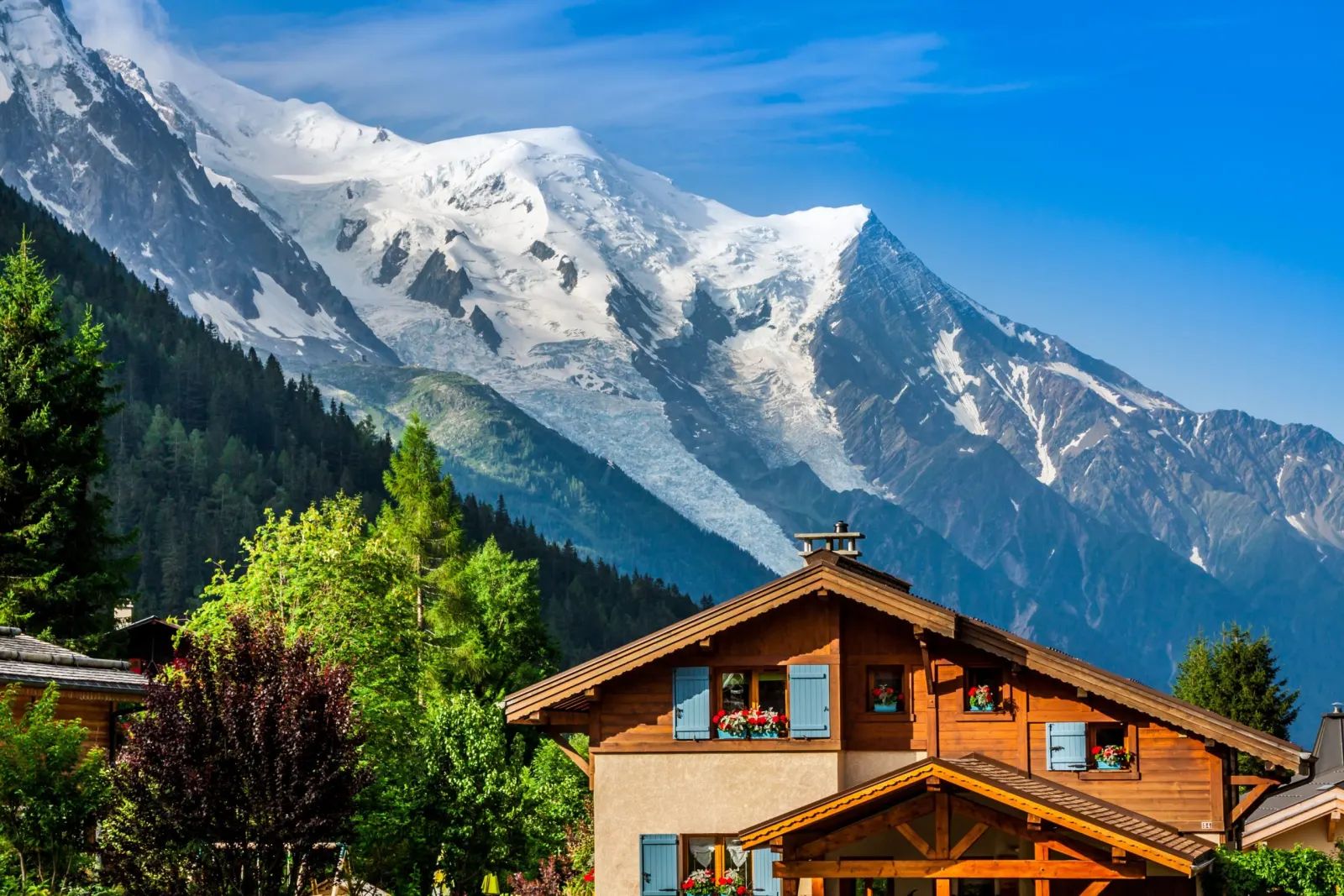
Chamonix and Megève remain benchmarks of Savoyard prestige. Close to Geneva, they attract cross-border commuters and international buyers. The market there is varied: renovated apartments in the centre, exceptional chalets. Easy access from Geneva and Alpine prestige make a strong argument.
New market trends
The remote-working effect
The spread of remote working has changed demand. Many buyers now want to use their second home as a second place to live. They look for spacious, well-connected properties that can be reached all year round.
Attention to energy efficiency
Energy performance is becoming a deciding criterion. Labels such as Minergie in Switzerland or BBC (low-energy building) in France are valued. A well-insulated chalet or villa with recent installations attracts buyers who want to keep energy bills down and reduce their carbon footprint.
The high-end experience
High-end buyers now expect integrated services: concierge, maintenance, security, wellness facilities. These services matter to them as much as the architecture of the property.
Three ways of using it
1. The classic pied-à-terre
Used at weekends and during the holidays, it must be easy to reach, with a good balance between the pleasure it gives and its upkeep budget.
2. The semi-main residence
It suits people who work remotely and spend part of the year away from their main home. It requires a high-speed connection and the same comfort as a main residence.
3. The hybrid investment
The property alternates between personal use and seasonal letting. The rent covers part of the costs, but this arrangement calls for rigorous logistics and professional management.
Tax and regulation
In Switzerland
Tax varies from canton to canton. Some costs are deductible, but you have to allow for tax on the imputed rental value (valeur locative) and for property gains tax (impôt sur les gains immobiliers) when you sell. The Lex Weber restricts the building of new second homes in tourist communes, which makes existing properties scarcer. Because the taxation of second homes differs widely from one canton to another, an accurate valuation and careful planning before the sale are essential.
In France
Tax is heavier there, especially capital gains tax and local taxes. Some schemes, such as furnished non-professional letting (LMNP), do however make it possible to optimise rental income.
Official source
For precise information, you can consult the Federal Office for Housing (FOH), which regularly publishes data and analyses.
Financing and real costs
Financing
For a second home, banks generally require a larger deposit, often around 30 to 40%. Mortgage rates vary with the buyer's profile and the intended use of the property.
Hidden costs
A second home comes with fixed costs: maintenance, charges, insurance, concierge, local taxes. For a high-end property, these costs can reach several tens of thousands of francs a year. Planning for them from the start avoids unpleasant surprises.
Rental income: potential and limits
Letting your property covers part of the costs, but the decision deserves some thought.
- High-end properties find tenants quickly, provided they offer a setting that stands out.
- Handing management to a concierge service ensures a quality service, but reduces the net return.
- Managing it yourself improves profitability, but takes time and a regular presence.
Risks and constraints
- Rental voids: even prestige properties can stay empty for several months.
- Demanding upkeep: the mountains and the lake bring their own constraints (snow, damp, changes in the weather).
- Regulatory changes: local rules can change, particularly on short-term letting or second-home quotas.
Sustainability and energy performance
Second homes follow the same trend as main residences: environmental criteria count for more and more. A chalet renovated with fine, eco-friendly materials and fitted with solar panels or a recent heat pump clearly stands out on the market. It costs less to run, and the property's image comes out stronger.
Labels such as Minergie in Switzerland guarantee a high level of energy efficiency. They particularly appeal to international buyers, who care about both their comfort and the environment. In the long run, these criteria will weigh more and more on resale value.
Passing on your wealth: preparing for the future
Building a second home into a succession strategy means starting early.
- Estate planning: set out clearly how the property will be divided between heirs to avoid conflict.
- Tax optimisation: usufruct, gifts made in stages or setting up a family property company can lighten the tax bill.
- Emotional legacy: a second home is also a place of memory. Preparing it to be passed on therefore means thinking about the family as much as about tax.
How to choose
A successful purchase rests on three criteria:
- The wider location: access, infrastructure, economic appeal.
- The immediate location: orientation, sunshine, neighbours, views.
- The property's own potential: build quality, outdoor space, scope for alterations.
Due diligence
Before buying, have the property checked in detail:
- Energy certificate (CECB in Switzerland, DPE in France).
- Legal check of easements.
- Review of the history of works.
- Estimate of future renovation costs.
Adding value and exit strategy
To get the best resale value, there is no need to renovate everything. A few targeted improvements, careful presentation and well-managed communication are often enough to create a sense of scarcity. The property can be marketed exclusively or off-market, to preserve confidentiality and the property's perceived value.
Case studies
A Geneva family
A family buys a chalet in Verbier for its winter holidays. It lets it during the quiet periods, which covers part of the costs, and gradually passes it on to the children.
A French entrepreneur
Based in Lausanne, he buys a villa with a lake view. The property is both a financial asset and a family home. Its location secures its value in the long term.
An expatriate based in Singapore
He chooses Chamonix for its proximity to Geneva and its international atmosphere. He entrusts the property to a concierge service, which lets it to give him a regular income.
A Vaud family
A couple of senior managers buy an apartment in Montreux as a pied-à-terre. By letting it in season over chosen periods, they fund part of the annual charges and use the property throughout the school holidays. This hybrid use combines pleasure and return.
Conclusion
Investing in a second home is rarely a purely emotional or a purely financial choice. The two logics almost always intertwine. On the shores of Lake Geneva as in the Alps, they reinforce each other. Well chosen, a second home serves at once as a personal retreat, an asset for diversification and a legacy to pass on.
Making such a project work takes financial expertise, knowledge of the local market and an understanding of the lifestyle you are after. The value of a second home lies in this balance: the pleasure it gives today and the place it will hold tomorrow in the family's wealth.